
Growth Hormone Stimulation
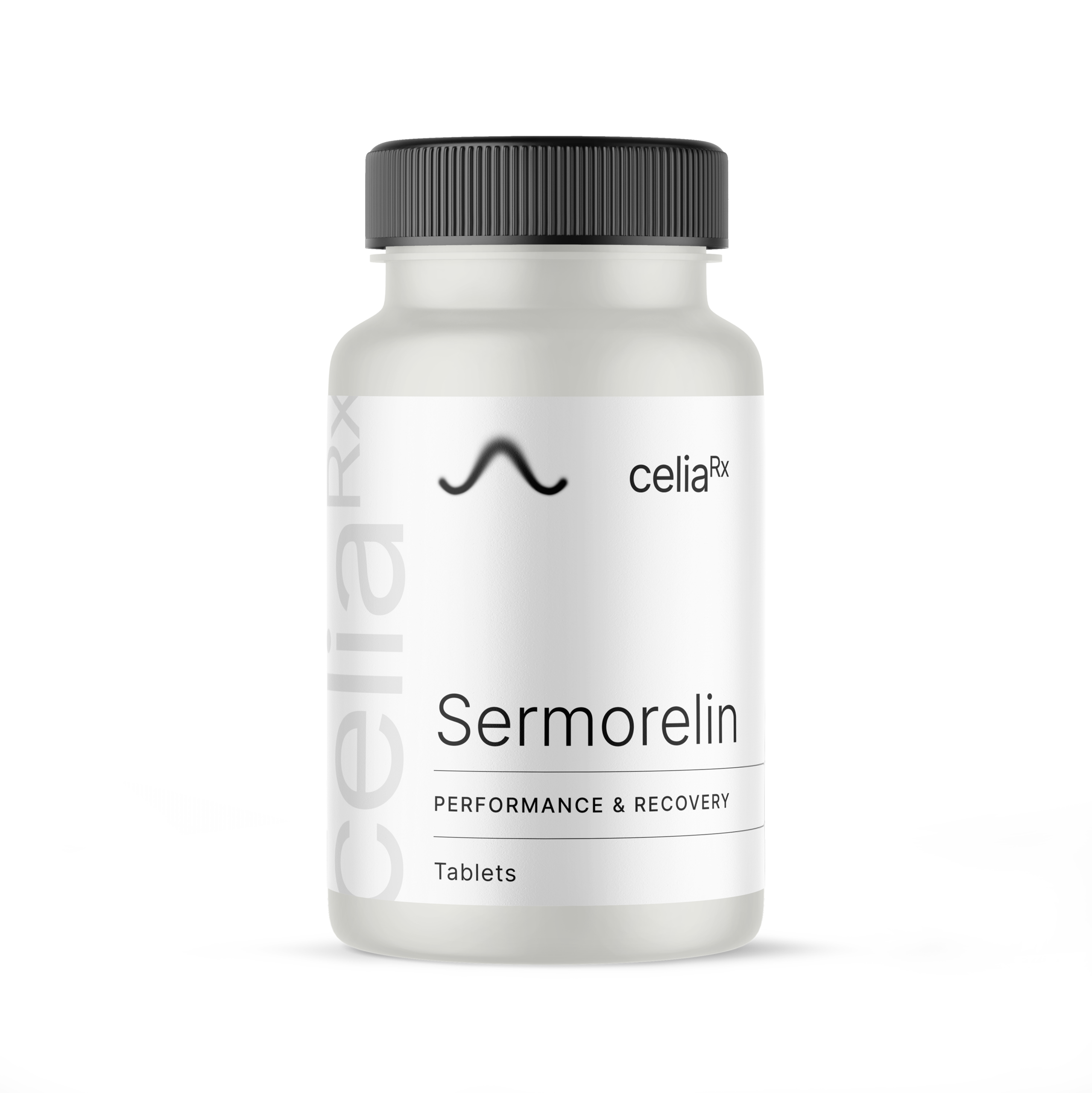
Mimics the body’s natural growth hormone-releasing hormone (GHRH) to stimulate endogenous growth hormone production.
$299.99
A peptide that supports your body's natural growth hormone production to promote recovery, sleep quality, lean body mass, and healthy body composition.

May support natural growth hormone production: Stimulates the pituitary gland to promote the body’s own GH release.

May support recovery: The GH/IGF-1 pathway plays a role in tissue repair, protein metabolism, and recovery.

May support sleep quality: Works with growth hormone pathways naturally associated with nighttime recovery.

May support lean body mass: Growth hormone signaling plays a role in protein metabolism and lean tissue maintenance.
Sermorelin affects growth hormone signaling and is not appropriate for every patient.
Avoid use with active malignancy. Because growth hormone and IGF-1 participate in cellular growth and proliferation, a history of malignancy or concern for active malignancy should be reviewed carefully with the prescribing clinician.
Additional clinical considerations may include:
Review your complete medical history, medications, supplements, and relevant laboratory results with your prescribing clinician before treatment.
Potential side effects may include:
Individual response and tolerability may vary.
No. Sermorelin does not provide growth hormone directly. It is a GHRH analog that signals the pituitary gland to release the body’s own growth hormone.
Growth hormone stimulates the production of insulin-like growth factor 1 (IGF-1). IGF-1 participates in tissue growth, repair, protein metabolism, and body composition.
The growth hormone/IGF-1 pathway participates in tissue repair, protein synthesis, and recovery. Sermorelin may therefore be incorporated into clinician-directed protocols focused on recovery and healthy growth hormone signaling. Individual response varies.
Growth hormone secretion is naturally associated with sleep, with significant physiological GH pulses typically occurring during deeper stages of sleep. Sermorelin may be incorporated into provider-guided protocols focused on nighttime growth hormone signaling, sleep quality, and recovery.
Growth hormone and IGF-1 participate in protein metabolism and the maintenance of lean tissue. Sermorelin may be used in clinician-directed protocols focused on lean body mass and body composition, although individual outcomes vary.
Growth hormone is naturally released in pulses, with significant physiological GH release occurring during sleep. Nighttime administration is commonly used to align treatment with the body’s nighttime growth hormone physiology.
No. This compounded Sermorelin Tablet Triturate is not FDA-approved. It is a compounded prescription formulation that may be prescribed when a licensed clinician determines that it is medically appropriate.
Compounded sermorelin may be prescribed through telehealth when a licensed clinician determines that treatment is medically appropriate and applicable prescribing and compounding requirements are satisfied.
Sermorelin is a synthetic peptide modeled after naturally occurring growth hormone-releasing hormone (GHRH). Rather than providing growth hormone directly, Sermorelin stimulates the pituitary gland to support the body’s own release of growth hormone.
This compounded tablet triturate provides a needle-free option for provider-guided Sermorelin therapy.
Compounded Sermorelin Tablet Triturate is not FDA-approved.
All dosing should follow the instructions provided by the prescribing clinician.
Mimics the body’s natural growth hormone-releasing hormone (GHRH) to stimulate endogenous growth hormone production.

Binds to GHRH receptors in the anterior pituitary gland, triggering the release of growth hormone (GH).

Stimulates downstream production of insulin-like growth factor 1 (IGF-1), which plays a role in tissue growth, protein metabolism, and cellular repair.

Promotes growth hormone release through the body’s natural pulsatile signaling pathway, which is particularly active during sleep.
Sermorelin is a growth hormone-releasing hormone analog that stimulates the pituitary gland to release endogenous growth hormone.
The appropriateness of Sermorelin is determined through an individualized medical evaluation. Current compounded Sermorelin preparations are not FDA-approved.
All dosing should follow the instructions provided by the prescribing clinician.
Injectable sermorelin mimics endogenous GHRH and binds GHRH receptors on pituitary somatotroph cells, stimulating the body’s own pulsatile release of growth hormone. Growth hormone subsequently promotes hepatic and peripheral IGF-1 signaling, which participates in protein synthesis, tissue remodeling, body composition, and metabolic regulation.