
Electron Transfer
Helps transfer electrons within cells, playing a role in cellular chemical reactions and energy processes.
$199.00
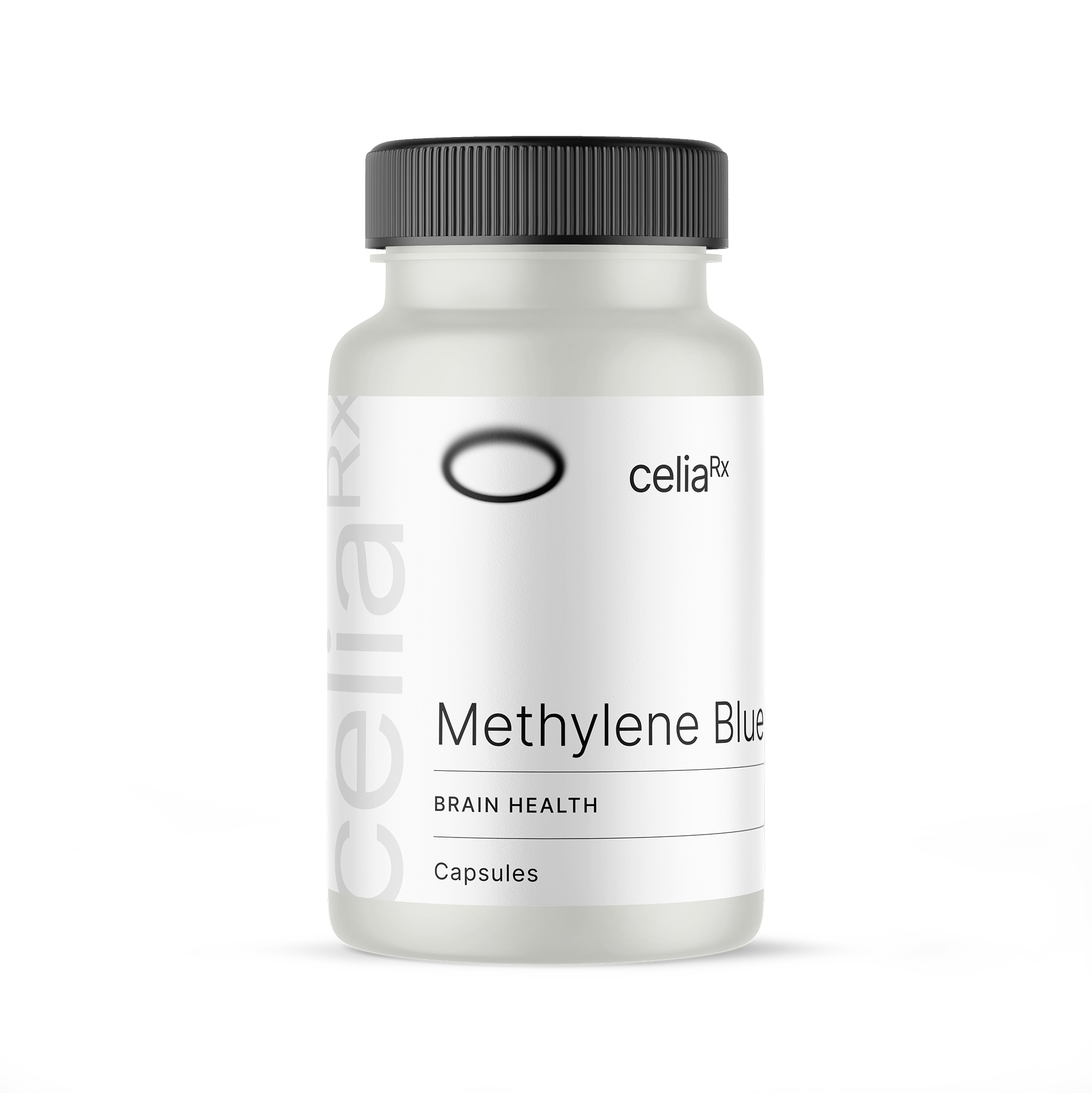
Methylene Blue is a mitochondrial support compound that enhances cellular energy production by improving electron transport efficiency. It is commonly used in cognitive, longevity, and neuroprotection-focused protocols.

May support mitochondrial function: Interacts with cellular electron-transfer and mitochondrial redox pathways.

May support cellular energy metabolism: Has been studied for its effects on mitochondrial processes involved in ATP production.

May support cognitive health: Investigated for its potential effects on neuronal energy metabolism and cognitive function.

May support oxidative balance: Participates in reversible oxidation-reduction reactions involved in cellular redox balance.
Methylene blue has clinically significant medication interactions and is not appropriate for every patient.
Avoid use with SSRIs or MAO inhibitors. Methylene blue has monoamine oxidase-inhibiting activity and can interact with medications and supplements that increase serotonin, potentially increasing the risk of serotonin syndrome, a serious and potentially life-threatening condition.
Medications and substances requiring careful review may include:
Methylene blue also requires particular caution in individuals with G6PD deficiency because of the potential risk of hemolysis.
Methylene blue is not recommended during pregnancy.
Provide your clinician with a complete list of medications, over-the-counter products, and supplements before treatment.
Potential side effects may include:
Because methylene blue is strongly pigmented, temporary discoloration of urine and other bodily fluids can occur.
Methylene blue can participate in electron-transfer reactions within mitochondrial redox pathways. This has generated research interest in its potential effects on mitochondrial function and cellular energy metabolism.
Methylene blue has been studied for its effects on mitochondrial electron transport and oxidative phosphorylation, processes involved in ATP production. However, its effects on ATP production and perceived energy in humans remain an area of research.
Methylene blue has been investigated for potential effects on neuronal energy metabolism, mitochondrial function, and cognition. It is not FDA-approved as a cognitive enhancer.
Methylene blue can inhibit monoamine oxidase A (MAO-A). When combined with certain medications that increase serotonin, including SSRIs and other serotonergic medications, serotonin can accumulate to unsafe levels and increase the risk of serotonin syndrome. Medication screening is especially important before treatment.
Methylene blue and its metabolites are strongly pigmented and are eliminated partly through the urine. Temporary blue or green urine discoloration can therefore occur and does not necessarily indicate a medical problem.
People with G6PD deficiency may have an increased risk of red blood cell breakdown, or hemolysis, with methylene blue exposure. Your clinician should consider this risk when determining whether treatment is appropriate.
No. This compounded capsule is not an FDA-approved formulation. Methylene blue has FDA-approved medical uses in other formulations and for specific indications, but mitochondrial, cognitive, neuroprotective, and longevity applications are not FDA-approved indications.
Compounded methylene blue may be prescribed through telehealth when a licensed clinician determines that treatment is medically appropriate and completes the necessary medication and medical-history review.
Methylene blue is a bioactive compound that interacts with cellular oxidation-reduction (redox) pathways and has a long history of medical and laboratory use.
Its ability to accept and donate electrons has generated scientific interest in its potential role in mitochondrial function, cellular energy metabolism, oxidative balance, and neurological health.
This compounded capsule may be prescribed as part of a clinician-directed protocol when medically appropriate.
All dosing should follow the instructions provided by the prescribing clinician.
Helps transfer electrons within cells, playing a role in cellular chemical reactions and energy processes.

May support mitochondrial function by helping move electrons through pathways involved in energy production.

Can influence the production of ATP, the body’s primary source of cellular energy, under certain experimental conditions.

Crosses the blood-brain barrier, where its potential effects on brain cell function and energy metabolism are being studied.
Methylene blue has established medical uses as well as off-label and investigational applications. It is being studied for its potential effects on mitochondrial function, cellular energy metabolism, and cognitive health, although these applications are not FDA-approved.
These uses of compounded oral methylene blue are off-label or investigational and are not FDA-approved indications.
All dosing should follow the instructions provided by the prescribing clinician.
Methylene blue is a redox-active compound that can accept and donate electrons, allowing it to interact with mitochondrial pathways involved in cellular energy production. At low concentrations, it has been studied for its ability to facilitate electron transfer within the mitochondrial electron transport chain and support ATP production. Its effects on mitochondrial bioenergetics and cellular redox balance have made it an area of interest in research related to cognition, neurological function, and cellular energy.