
Growth Hormone Stimulatio
Mimics the body’s natural growth hormone-releasing hormone (GHRH) to stimulate endogenous growth hormone production.
$299.00
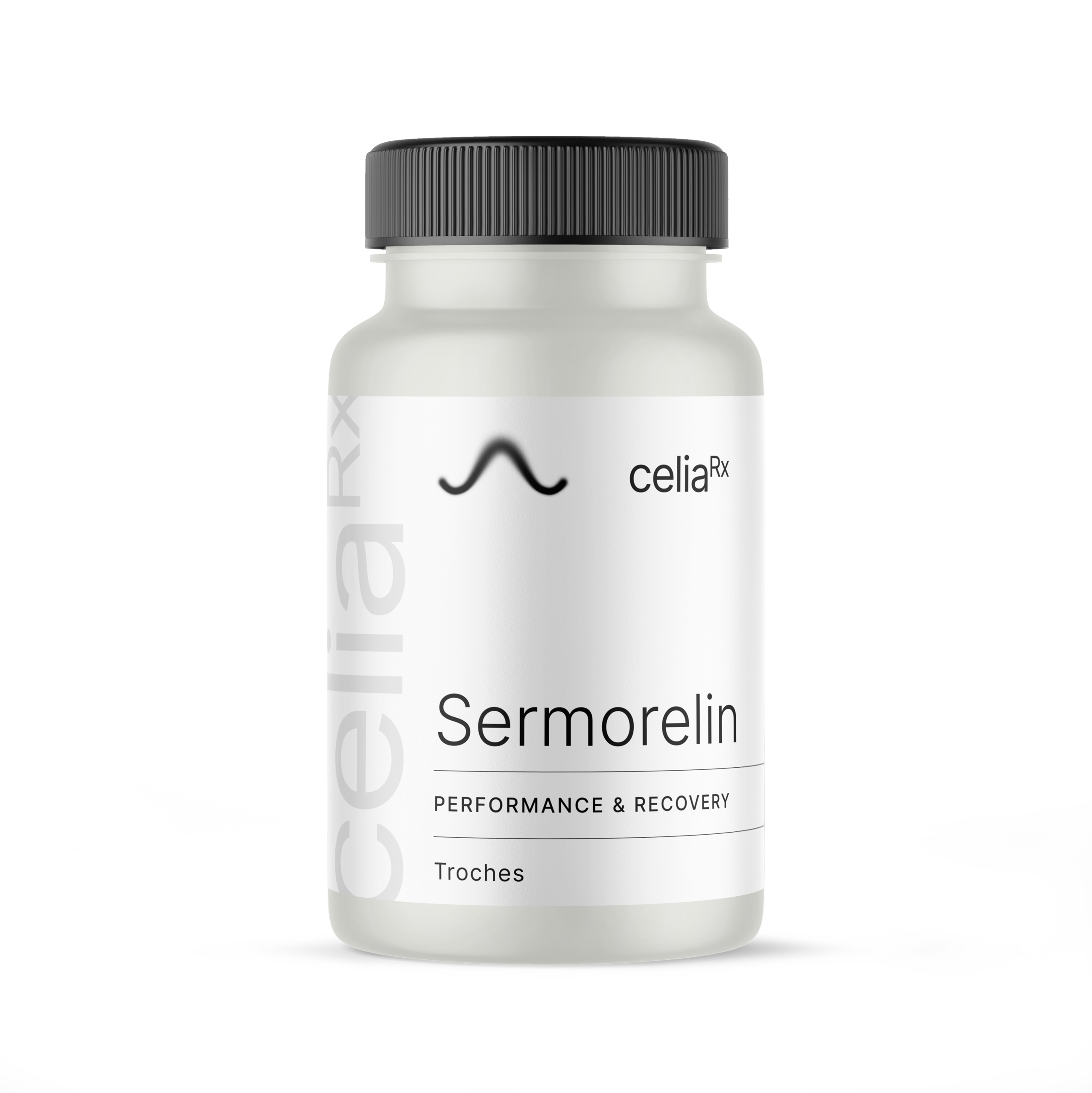
A nightly prescription peptide troche designed to support your body's natural growth hormone production, recovery, sleep-related recovery, and healthy body composition.

Supports natural growth hormone release: Sermorelin stimulates GHRH receptors on the pituitary gland to support endogenous GH secretion.

Supports recovery: GH/IGF-1 signaling participates in protein metabolism, tissue remodeling, and physical recovery.

Supports sleep-related recovery & body composition: Growth hormone signaling is associated with nighttime recovery, lean-tissue physiology, and fat metabolism.

Convenient non-injectable delivery: Provides a troche option for clinician-directed sermorelin treatment.
History or active malignancy: According to the supplied product information, sermorelin should be avoided with a history or active malignancy. GH and IGF-1 participate in cellular growth, proliferation, and tissue signaling.
Pituitary & hypothalamic conditions: Because sermorelin acts through the pituitary growth hormone pathway, patients with known pituitary or hypothalamic disorders should discuss their history with their clinician.
Glucose regulation: Growth hormone can influence glucose metabolism and insulin sensitivity. Patients with diabetes, prediabetes, insulin resistance, or other glucose-regulation disorders should discuss these conditions with their clinician.
Thyroid function: Thyroid function and the growth hormone axis can interact. Patients with thyroid disorders should discuss their history, medications, and relevant laboratory testing with their clinician.
Fluid retention: Growth hormone-related signaling may contribute to fluid retention in some individuals. Significant or persistent swelling should be reported to the clinician.
Pregnancy & breastfeeding: Safety data for compounded sermorelin troches during pregnancy and breastfeeding are limited. Discuss treatment with your clinician if pregnant, planning pregnancy, or breastfeeding.
Potential side effects may include:
Clinical safety and pharmacokinetic data for compounded troche formulations are more limited than for injectable sermorelin.
Sermorelin binds to GHRH receptors on the anterior pituitary gland, stimulating the pituitary to release the body’s own growth hormone.
No. Sermorelin does not directly supply growth hormone. Instead, it stimulates the pituitary gland to release endogenous growth hormone, making its mechanism different from administering HGH directly.
Growth hormone stimulates production of insulin-like growth factor-1 (IGF-1), particularly in the liver. Many downstream effects associated with the growth hormone pathway involve both GH and IGF-1 signaling.
Growth hormone and IGF-1 participate in protein metabolism, tissue remodeling, and repair pathways, providing a biological rationale for clinician-directed recovery protocols. Sermorelin is not FDA-approved specifically for exercise recovery or injury healing.
Growth hormone is naturally released in pulses, with a major physiological pulse associated with deep sleep. Nighttime administration is intended to align treatment with this aspect of normal GH physiology. The supplied instructions direct this formulation to be taken before bedtime.
GH and IGF-1 signaling influence protein metabolism, lean tissue, and fat metabolism. Sermorelin may therefore be incorporated into clinician-directed body-composition protocols, although individual results can vary substantially.
No. Troche and injectable formulations differ in route of administration, absorption, pharmacokinetics, and formulation characteristics. The compounded troche should not be assumed to provide the same systemic exposure or clinical effects as injectable sermorelin.
No. This compounded Sermorelin Troche formulation is not FDA-approved. Although sermorelin was historically marketed as an FDA-approved injectable product for specific pediatric applications, this compounded troche has not undergone FDA premarket review for safety or effectiveness.
Sermorelin Troche is a compounded peptide formulation designed to support the body’s natural growth hormone pathway.
Sermorelin mimics growth hormone-releasing hormone (GHRH), signaling the pituitary gland to release the body’s own growth hormone rather than supplying growth hormone directly.
The troche provides a convenient non-injectable option for clinician-directed sermorelin treatment.
This compounded Sermorelin Troche formulation is not FDA-approved.
All dosing should follow the instructions provided by the prescribing clinician.
Mimics the body’s natural growth hormone-releasing hormone (GHRH) to stimulate endogenous growth hormone production.

Binds to GHRH receptors in the anterior pituitary gland, triggering the release of growth hormone (GH).

Stimulates downstream production of insulin-like growth factor 1 (IGF-1), which plays a role in tissue growth, protein metabolism, and cellular repair.

Promotes growth hormone release through the body’s natural pulsatile signaling pathway, which is particularly active during sleep.
Use of sermorelin for body composition, athletic recovery, sleep enhancement, or anti-aging purposes is not an FDA-approved indication. Treatment eligibility should be determined through individualized medical evaluation.
All dosing should follow the instructions provided by the prescribing clinician.
Serrmorelin mimics endogenous GHRH and binds GHRH receptors on pituitary somatotroph cells, stimulating the body’s own pulsatile release of growth hormone. Growth hormone subsequently promotes hepatic and peripheral IGF-1 signaling, which participates in protein synthesis, tissue remodeling, body composition, and metabolic regulation.