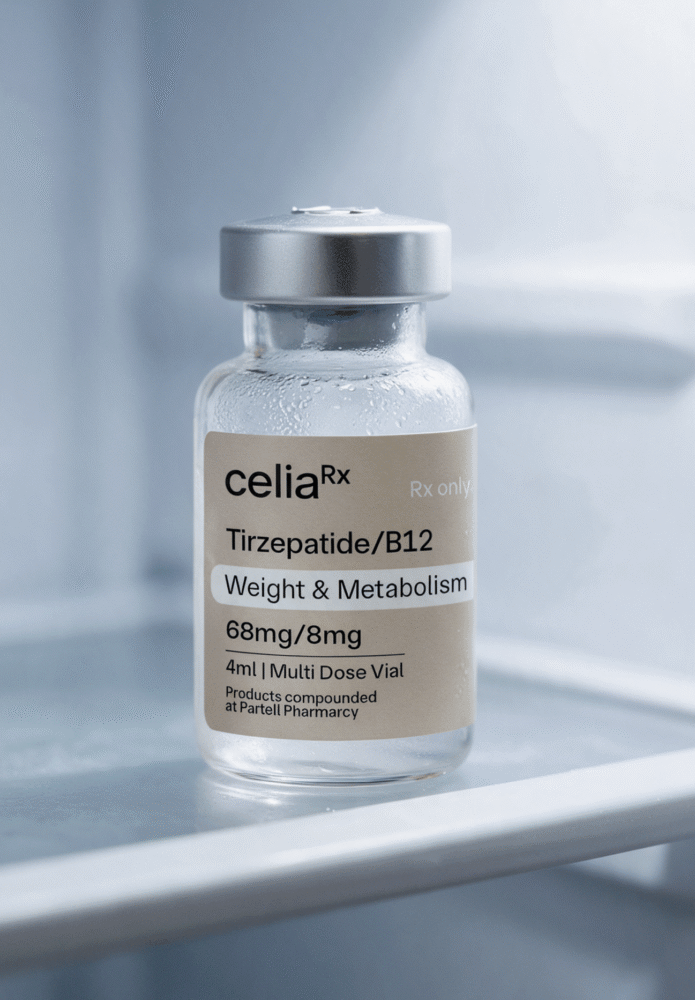

Weight management medications fall into two broad categories: traditional small-molecule drugs that have been prescribed for decades, and newer peptide-based compounds that work through different biological pathways.
Traditional options such as older stimulant-class or lipase-inhibitor drugs were the primary pharmacological tools available for many years. Peptide-based medications represent a more recently developed class. Among these, GLP-1 receptor agonists have become the subject of extensive clinical research because of the role GLP-1 plays in appetite signaling and metabolic regulation.
GLP-1 stands for glucagon-like peptide-1, a hormone the body naturally produces in response to food intake. Researchers have investigated whether compounds that activate GLP-1 receptors might influence appetite, gastric emptying, and blood sugar regulation. The clinical trial data on this question is among the most substantial in recent obesity medicine research.
It is important to understand what “weight loss medication” means in a clinical context: these are prescription compounds evaluated in populations of adults with obesity or overweight-related health conditions, used alongside lifestyle modifications, and prescribed only after a licensed provider determines they are appropriate for a given individual.
Tirzepatide and Semaglutide: What Clinical Research Has Investigated
Two compounds have generated the largest bodies of clinical trial data in the GLP-1 medication category: tirzepatide and semaglutide. Below is a summary of what key research programs have studied – not a guarantee of any individual outcome.
Tirzepatide (Dual GLP-1 / GIP Receptor Agonist)
Tirzepatide activates both GLP-1 receptors and GIP (glucose-dependent insulinotropic polypeptide) receptors. Researchers have investigated whether dual receptor agonism produces different effects compared with GLP-1 agonism alone.
The SURMOUNT-1 Phase 3 trial – a 72-week randomized, double-blind, placebo-controlled study – evaluated tirzepatide in adults with obesity or overweight with at least one weight-related comorbidity (excluding type 2 diabetes). At the highest dose studied, participants in the active arm experienced a mean body weight reduction of approximately 22.5% from baseline. Participants at lower doses experienced mean reductions of approximately 15% and 19.5%, depending on the dose arm.
These are mean findings from a specific clinical population under study conditions. They do not represent a guaranteed outcome for any individual.
Celia offers compounded tirzepatide as a prescription compound in injectable form (tirzepatide injections) and as an orally dissolving tablet (oral tirzepatide tablets). Both require a valid prescription following evaluation by a licensed Celia clinician.
Semaglutide (GLP-1 Receptor Agonist)
Semaglutide is a GLP-1 receptor agonist that has been studied in multiple Phase 3 programs. The STEP-1 trial – a 68-week randomized, double-blind, placebo-controlled study – evaluated semaglutide in adults with obesity or overweight with at least one weight-related comorbidity. Participants in the active arm experienced a mean body weight reduction of approximately 14.9% from baseline.
The SELECT cardiovascular outcomes trial additionally studied semaglutide in adults with overweight or obesity and established cardiovascular disease. The research program is among the more extensively studied in this category.
As with tirzepatide, clinical trial outcomes reflect mean findings in studied populations under controlled conditions. Individual response varies based on many factors a clinician should evaluate.
Celia offers compounded semaglutide as a prescription compound in injectable form (compounded semaglutide injections) and as an orally dissolving tablet (semaglutide tablets). Both require a valid prescription following evaluation by a licensed Celia clinician.
Tirzepatide vs. Semaglutide: What the Research Compares
Both compounds have been studied in large Phase 3 randomized controlled trials using similar endpoints. Here is a side-by-side summary of key research characteristics – not a recommendation of one over the other, as the appropriate choice depends on an individual’s medical profile and a licensed provider’s evaluation.
| Factor | Tirzepatide | Semaglutide |
| Mechanism | Dual GLP-1/GIP receptor agonist | GLP-1 receptor agonist |
| Available as | Injectable or oral tablet (ODT) | Injectable or oral tablet (ODT) |
| Clinical weight reduction studied | Up to ~22% body weight (SURMOUNT-1 trial, highest dose) | ~15% body weight (STEP-1 trial) |
| Cardiovascular research | SURPASS-CVOT data available | SELECT trial cardiovascular data available |
| Forms at Celia | Injectable + oral ODT | Injectable + oral ODT |
| Administration | Once weekly injection or daily ODT | Once weekly injection or daily ODT |
| Prescription required | Yes – licensed provider evaluation required | Yes – licensed provider evaluation required |
Understanding Prescription Weight Management Options
The weight management medication landscape includes several categories. For context, here is how the most commonly discussed options are characterized in the research literature:
GLP-1 and Dual Agonist Compounds
As discussed above, tirzepatide and semaglutide represent the category with the most recent and extensive Phase 3 clinical trial data specifically focused on weight outcomes in adults with obesity.
Oral Options: ODT Formulations
Both tirzepatide and semaglutide are available in oral dissolving tablet (ODT) formulations. Research into oral peptide delivery mechanisms has expanded in recent years. Oral formulations may be appropriate for individuals for whom injectable administration is not preferred a decision that should be made with a prescribing clinician.
Metformin as a Metabolic Support Compound
Metformin is a long-studied small-molecule compound primarily associated with blood sugar regulation in the management of type 2 diabetes. Some research has investigated its use in broader metabolic health contexts. It is not typically considered a primary weight-management medication, and weight-related outcomes reported in research vary widely. Whether metformin is appropriate in any individual’s protocol is a clinical question.
Clinical Evidence at a Glance
The following table summarizes key research programs for the compounds discussed above. This is a research summary not a treatment comparison or efficacy ranking.
| Compound | Key Trial / Evidence | What Research Observed |
| Tirzepatide | SURMOUNT-1 (Phase 3) | Up to ~22% mean body weight reduction at highest dose studied in adults with obesity |
| Semaglutide | STEP-1 (Phase 3) | Mean ~15% body weight reduction in adults with obesity or overweight with comorbidities |
| Metformin (adjunct) | Multiple metabolic trials | Studied as metabolic support; not a primary weight-loss drug – weight outcomes vary significantly |
What to Understand Before Considering Any Weight Management Medication
Several points are worth understanding before exploring prescription weight management options:
- These are prescription medications. None of the compounds discussed are available without evaluation by a licensed healthcare provider. Self-prescribing or obtaining these medications outside a legitimate clinical pathway is not appropriate and carries significant risks.
- Research findings reflect populations, not individuals. A mean weight reduction of 15% or 22% in a clinical trial means the average of all participants in that arm experienced that change not that every individual did. Some participants experienced more, some less, and some discontinued due to side effects.
- Side effects are documented. GLP-1 receptor agonists have known side effect profiles, including gastrointestinal effects. These are discussed during a clinical evaluation. Any medication carries risks that a licensed provider must weigh against potential benefits.
- Lifestyle factors matter. Clinical trials for these compounds generally include lifestyle modification components. Medication is studied as one part of a broader approach to metabolic health.
- Compounded medications are not FDA-approved drugs. Compounded prescription medications dispensed by licensed 503A pharmacies are not reviewed by the FDA in the same way as approved drugs. They are prescription compounds requiring a licensed provider’s evaluation and are subject to state pharmacy regulation.
Speak with a Celia ClinicianIf you are exploring prescription weight management options, a Celia-affiliated licensed clinician can evaluate your health history, discuss the research, and determine whether a prescription compound is appropriate for your individual situation. → Book a Consultation | Explore Weight & Metabolism Programs |
Frequently Asked Questions
What is the most studied prescription medication for weight management in people with obesity?
Among the compounds with large-scale Phase 3 trial data specifically focused on weight outcomes, tirzepatide and semaglutide have produced the most extensive recent datasets. Both are GLP-1 receptor agonists (tirzepatide additionally acts on GIP receptors). Clinical trial findings vary by dose, population, and study design. A licensed provider can discuss which, if either, may be appropriate for a given individual.
Is there a prescription weight loss pill rather than an injection?
Both tirzepatide and semaglutide are available in oral dissolving tablet (ODT) formulations in addition to injectable forms. Whether an oral or injectable form is appropriate depends on a clinical evaluation and individual preferences discussed with a licensed provider.
What does the research say about GLP-1 medications and weight?
GLP-1 receptor agonists have been studied in multiple large randomized controlled trials. Researchers have investigated their effect on body weight, appetite regulation, and metabolic markers. The most cited outcomes come from STEP-1 (semaglutide) and SURMOUNT-1 (tirzepatide) trials. Results represent averages in the studied populations, not guaranteed individual outcomes.
Do weight loss injections actually work?
GLP-1-based injectable medications have produced statistically significant weight reductions versus placebo in multiple Phase 3 randomized controlled trials. The magnitude of response varies by individual. These medications are not appropriate for everyone and are prescribed only after a licensed provider evaluates a patient’s full health picture.
How is compounded semaglutide or tirzepatide different from the brand-name version?
Compounded prescription medications are prepared by licensed 503A compounding pharmacies following a valid prescription. They are not FDA-approved drugs and have not been reviewed by the FDA for safety, efficacy, or quality in the way approved drugs have. They are regulated at the state pharmacy level. Whether a compounded version is appropriate is a question a licensed prescriber must evaluate.
Can I get these medications without a prescription?
No. These are prescription compounds. Celia medications are dispensed only following evaluation by a licensed healthcare provider. Self-sourcing prescription compounds without clinical supervision is not appropriate and carries significant health risks.