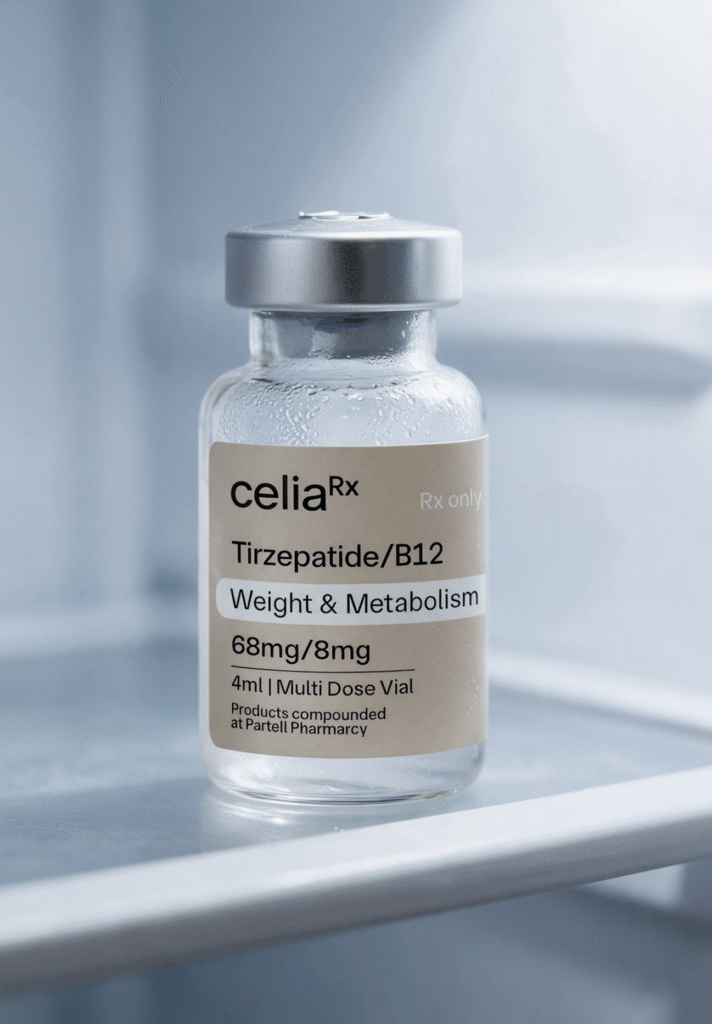
Yes. Tirzepatide, whether dispensed as a branded pen or as a compounded formulation, is generally intended to be stored under refrigeration between 36°F and 46°F (2°C to 8°C). Tirzepatide is a peptide-based molecule, and peptides are sensitive to heat, light, and temperature swings that can gradually affect their structure. Keeping the medication cold helps support the stability window the compounding pharmacy accounted for when assigning its Beyond-Use Date. Freezing is a separate concern, since freezing temperatures can also affect peptide molecules, so tirzepatide should never be placed in the freezer or used if it is known to have been frozen.
Because compounded tirzepatide is prepared by a licensed 503A pharmacy for your specific prescription, the storage window and handling instructions on your label take precedence over general guidance found online. If anything below appears to conflict with your pharmacy’s label, follow the label.
How to Store Tirzepatide Correctly
A few habits go a long way toward protecting the medication between doses:
- Keep it in the main body of the refrigerator, not the door, where temperature fluctuates each time the fridge is opened.
- Avoid the space directly against the back wall or near the freezer compartment, where items can freeze inadvertently.
- Leave the vial or pen in its original packaging or carton to help shield it from light, which can also affect peptide stability over time.
- Store it away from produce drawers or areas prone to condensation, and keep it upright where possible.
- If you use a dedicated medication fridge or thermometer, periodic temperature checks can help confirm the unit is holding within the 36–46°F range.
How Long Can Compounded Tirzepatide Be Out of the Fridge?
Room-temperature stability data for tirzepatide comes primarily from studies on the FDA-approved branded pens, which is different from compounded formulations dispensed under a 503A prescription. Manufacturer guidance for the branded product describes a defined room-temperature window before the medication should be discarded, generally understood to be a period of a few weeks at moderate room temperatures. Compounded tirzepatide is prepared with its own excipients and packaging, so its stability outside the fridge is set by the dispensing pharmacy rather than the manufacturer’s data for the branded product.
Because of this difference, Celia does not publish a single universal room-temperature window for compounded tirzepatide. Your prescription label and any instructions provided by your care team reflect the Beyond-Use Date and handling window specific to your formulation and should be treated as the authoritative source.
Tirzepatide Storage When Traveling
Travel is one of the more common ways temperature control gets interrupted, so a little planning helps:
- Use an insulated cooler bag with gel ice packs designed for medication, rather than loose ice, to avoid direct freezing contact.
- Keep the medication in its original packaging with the label visible, which can also help if you need to explain the contents during security screening.
- For air travel, medication and the supplies needed to keep it cold are generally permitted in carry-on bags; screening rules can change, so it is worth checking current guidance before you fly.
- If your medication is inadvertently left at a warm temperature for an extended period, such as in a hot car, treat that as a temperature excursion. Note how long it was exposed and the approximate temperature, and contact your care team to ask whether the dose is still appropriate to use.
- On multi-day trips, plan refrigeration access at your destination in advance rather than relying solely on a cooler for the entire trip.
Does Tirzepatide Expire?
Compounded tirzepatide carries a Beyond-Use Date (BUD) rather than a manufacturer expiration date. The BUD is assigned by the compounding pharmacy in line with United States Pharmacopeia (USP) standards and reflects how long that specific preparation is expected to remain stable when stored as directed. This date is typically shorter than the multi-year expiration dates seen on some FDA-approved medications, since compounded preparations are made in smaller batches without the same long-term stability testing.
Using a preparation after its BUD, or after it has been stored outside the recommended temperature range, may mean the medication has lost potency or is no longer reliable. If you are ever uncertain whether your prescription is still within its usable window, check the date on your label or reach out to your care team before using it.
Signs Your Tirzepatide May Have Been Compromised
Before each injection, take a moment to visually inspect the solution. Do not use the medication if you notice any of the following, and contact your care team instead:
- Cloudiness or a hazy appearance in a solution that should be clear
- Visible particles, flecks, or sediment in the vial
- A color change, such as noticeable yellowing or darkening beyond what your label describes as normal
- A vial or pen that you know was frozen or left at a high temperature for an extended period
- Packaging that appears damaged, punctured, or improperly sealed
What to Understand Before Storing Your Prescription
Tirzepatide, in any form, is available only by prescription following evaluation by a licensed healthcare provider. Compounded medications are prescription compounds dispensed by licensed 503A pharmacies. They are not FDA-approved drugs and have not been reviewed by the FDA for safety, efficacy, or quality in the way approved drugs have. Celia offers compounded tirzepatide injections and compounded tirzepatide oral tablets as prescription compounds, each dispensed with a label reflecting the specific formulation, Beyond-Use Date, and storage instructions assigned by the dispensing pharmacy. Storage guidance in this article is general in nature. Always follow the instructions on your own label, and reach out to your care team with any storage or handling questions specific to your prescription.
| Have a Storage Question About Your Prescription?
If you’re unsure whether a vial or pen is still good to use, don’t guess. Your care team can review the details and let you know how to proceed. Reach out through your Weight & Metabolism consultation to connect with your care team, or explore Celia’s compounded tirzepatide options to learn more about the prescriptions available. |
Frequently Asked Questions
Does tirzepatide need to be kept in the fridge?
In most cases, yes. Both branded and compounded tirzepatide are generally intended to be refrigerated between 36°F and 46°F until use, though your specific label should always be the final word.
How long can compounded tirzepatide be left out of the refrigerator?
This depends on the pharmacy and formulation that prepared your prescription. Compounded products do not follow the same room-temperature data published for branded pens, so check your label or ask your care team for guidance specific to your prescription.
Does tirzepatide expire after opening?
Compounded tirzepatide is governed by a Beyond-Use Date rather than a traditional expiration date. Once that date passes, or if the medication has been stored outside the recommended range, it should not be used.
How should tirzepatide be stored at home?
In the main body of the refrigerator (not the door), in its original packaging, away from the freezer compartment and areas prone to condensation.
Can tirzepatide be stored at room temperature?
Some formulations tolerate limited room-temperature storage, but the allowable window and temperature range vary. Rely on your pharmacy’s label rather than a general rule of thumb.
What happens if tirzepatide is not refrigerated properly?
Improper storage, including exposure to heat, light, or freezing, may affect the medication’s stability and potency. If you suspect your prescription was stored incorrectly, contact your care team before using it.