Peptides are short chains of amino acids that act as signaling molecules in the body. Rather than adding a substance the body lacks outright, most peptides work by instructing existing cells and systems to do something, produce more collagen, release growth hormone, or activate a repair pathway.
This is the key difference between anti-aging peptides and the cosmetic peptides found in serums and creams. Cosmetic peptides are applied topically and act mainly on the skin’s surface layers, encouraging local collagen production. Anti-aging and longevity peptides, by contrast, are typically administered orally, sublingually, or by injection so they can reach systemic circulation and influence processes throughout the body, not just the skin.
Best Injectable Peptides for Anti-Aging and Longevity
Below is a look at some of the most discussed peptides for anti ageing and longevity, based on how directly their studied mechanisms connect to the hallmarks of aging, including telomere attrition, mitochondrial decline, growth hormone loss, and inflammaging.
1. GHK-Cu
GHK-Cu is a copper-binding peptide studied for its role in collagen synthesis, wound healing, and gene expression related to tissue repair. Research suggests it may help support the skin’s structural proteins and contribute to DNA repair signaling, making it a frequent topic in both dermatological and systemic longevity discussions.
2. Epitalon
Epitalon is studied for a more specific mechanism: supporting telomerase activity, the enzyme responsible for maintaining telomere length. Because telomere attrition is one of the primary hallmarks of aging, Epitalon is often positioned as one of the more direct longevity-focused peptides, though research in this area is still developing and remains largely preclinical.
3. Sermorelin
Sermorelin is a growth hormone-releasing hormone (GHRH) analog. Rather than introducing synthetic growth hormone directly, it prompts the pituitary gland to release its own GH more naturally, and clinicians typically prescribe it as a Sermorelin injectable for a guided, monitored protocol. This is associated with better muscle preservation, improved recovery, and more restorative sleep, three areas that tend to decline with age.
4. CJC-1295
CJC-1295 is also a GHRH analog, but modified to bind serum albumin, which extends its activity from minutes to several days. Research on CJC-1295 has shown sustained elevation of growth hormone and IGF-1 levels with less frequent dosing than shorter-acting GHRH peptides, and it is frequently studied for its role in age-related GH decline, body composition, and recovery.
Ipamorelin
Ipamorelin works through a different pathway than Sermorelin and CJC-1295. It is a ghrelin receptor agonist, meaning it triggers GH release through the ghrelin receptor rather than the GHRH receptor. Its main research appeal is selectivity: studies describe it as producing a targeted GH pulse with comparatively little effect on cortisol or prolactin, which is why it is often studied alongside GHRH analogs like CJC-1295 rather than on its own.
5. BPC-157
BPC-157 is a peptide fragment originally identified in gastric juice, studied mainly for tissue repair, gut lining support, and recovery-related signaling in animal and laboratory models. Human clinical data remains limited, and its regulatory status has shifted multiple times through 2026 as the FDA has reviewed its compounding classification. It should be considered investigational rather than an established anti-aging therapy.
How Peptide Delivery Methods Affect Effectiveness
Delivery method has a real effect on how well a peptide works. Injectable and subcutaneous administration bypasses the digestive system, which means the peptide reaches systemic circulation largely intact instead of being broken down during digestion. This is a big part of why most of the peptides discussed above, Sermorelin, CJC-1295, and Ipamorelin in particular, are formulated as injectables rather than oral tablets.
Among the options covered here, Sermorelin and CJC-1295 are generally considered the most established injectable peptides for anti-aging, given their track record in GH-axis research. Ipamorelin is frequently paired with one of the two as an injectable combination, since its ghrelin-receptor mechanism complements rather than duplicates GHRH activity. BPC-157 is also available in injectable form, though its research base is earlier stage and its regulatory status has been more unsettled through 2026.
Topical peptides, by contrast, are generally limited to the outer layers of skin and rarely reach deeper tissue or the bloodstream in meaningful concentrations, which is why anyone looking for systemic anti-aging effects rather than surface-level skin support tends to be steered toward injectable or sublingual formats under clinical guidance.
Other Compounds and Nutrients for Healthy Aging
Peptides are only one part of a longevity protocol. Several nutrients and compounds are commonly paired with peptide therapy to support the systems that keep cells functioning well as the body ages.
1. NAD+ for Cellular Energy
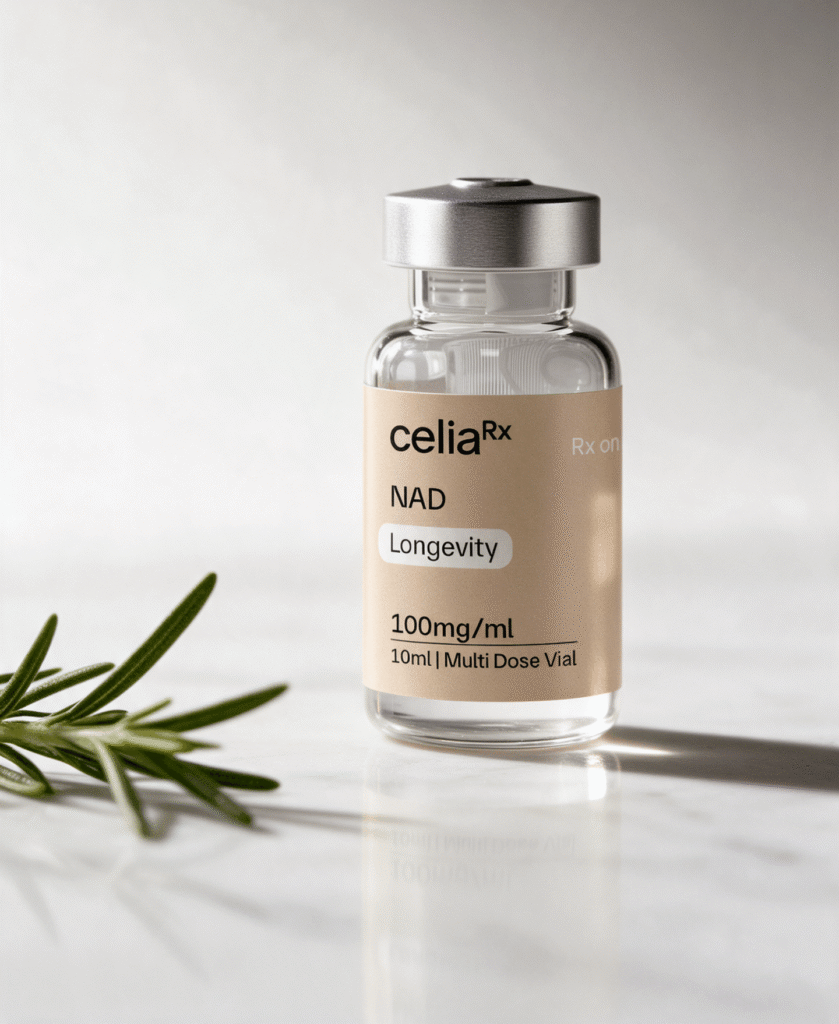
NAD+ is a coenzyme involved in mitochondrial energy production and DNA repair. Levels are known to decline with age, and NAD+ support, whether as an NAD+ injectable or an NAD+ oral troche, is studied for its potential role in maintaining cellular energy output and metabolic function.
2. Glutathione for Antioxidant Support
Glutathione is one of the body’s primary antioxidants, helping to neutralize oxidative stress that contributes to cellular aging. Levels tend to decrease with age, which is part of why glutathione, often delivered as a glutathione nasal spray for easier absorption, is frequently paired with peptide protocols aimed at broader cellular support.
3. B Vitamins for Energy and Cellular Function
B vitamins, including B12 and the broader B-complex group, support energy metabolism, nerve function, and red blood cell production. A B-complex injectable is a common way to cover this group, and it’s commonly included in longevity-focused protocols as a foundational layer rather than a stand-alone anti-aging intervention.
Peptides vs. Vitamins and Other Longevity Compounds
Peptides and vitamins support the body in different ways. Vitamins and nutrients like NAD+, glutathione, and B-complex generally act as building blocks or cofactors, supplying the raw material cells need to carry out everyday functions such as energy production and antioxidant defense. Peptides, by contrast, act more like messengers, prompting specific cellular processes such as GH release, telomerase activity, or tissue repair signaling.
Neither category replaces the other. Many clinician-guided longevity protocols combine both, using nutrients to support baseline cellular function while peptides target more specific, mechanism-driven goals.
What Does the Research Say About Anti-Aging Peptides?
Most of the research behind these peptides is still in early stages. Sermorelin, CJC-1295, and Ipamorelin have the most established mechanistic research, largely because they build on decades of study into growth hormone-releasing hormone and ghrelin biology. GHK-Cu has a longer research history in wound healing and dermatology, with growing interest in its systemic effects. Epitalon and BPC-157 have more limited human clinical data, with most of the current evidence coming from animal and laboratory studies.
Across the board, researchers are careful to note that promising mechanistic or preclinical findings are not the same as proven anti-aging outcomes in humans. This is an active and evolving area of research, not a settled one.
Are Anti-Aging Peptides FDA Approved?
No peptide discussed in this guide is FDA-approved for anti-aging use. Their regulatory status varies and has shifted over time. Some, including BPC-157 and Epitalon, have moved through FDA compounding advisory reviews in 2026 regarding their eligibility for the Section 503A bulks list, but eligibility for compounding is a different designation from FDA drug approval, which requires completed multi-phase clinical trials for a specific indication. Anyone considering peptide therapy should work with a licensed clinician who can explain current regulatory status and sourcing considerations.
Ready to Explore a Longevity Protocol?
A clinician can help determine which peptides, if any, fit your health profile. Book a consultation to get started, or learn more about Celia’s longevity program.
Frequently Asked Questions
What are the best peptides for anti-aging?
GHK-Cu, Epitalon, Sermorelin, CJC-1295, Ipamorelin, and BPC-157 are among the most researched, each targeting a different mechanism tied to aging, from collagen and telomere support to growth hormone release and tissue repair.
What is the best injectable peptide for anti-aging?
Sermorelin and CJC-1295 are among the most commonly used injectable peptides for anti-aging purposes, given their role in supporting natural growth hormone release.
What peptide is best for longevity?
No single peptide covers every hallmark of aging, so many longevity protocols combine peptides such as Epitalon and Sermorelin, or CJC-1295 and Ipamorelin, under clinical supervision.
Do peptides actually slow aging?
Peptides are being studied for their ability to support processes tied to aging, such as GH production, collagen synthesis, and tissue repair. They should be viewed as supportive tools within a broader health protocol, not a guaranteed anti-aging solution.
What is the difference between anti-aging peptides and skin peptides?
Skin or cosmetic peptides are applied topically and act mainly on the skin’s surface. Anti-aging peptides used for longevity are typically taken orally, sublingually, or by injection to reach systemic circulation.
What peptide will make you look younger?
GHK-Cu is the peptide most associated with visible skin benefits, since it is studied for its role in collagen synthesis and skin structural proteins. Results vary and are not guaranteed.
What is the most promising peptide?
There is no single consensus answer, since each peptide targets a different mechanism. Sermorelin and CJC-1295 currently have the most established mechanistic research among the options covered here.